Walking Through 2,500 Years of History: Your Guide to Dalt Vila
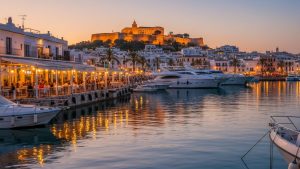
If you have ever wandered the narrow streets of a Mediterranean citadel and felt centuries melt away beneath your feet, you will understand why Dalt Vila is the soul of Ibiza. Perched above Ibiza Town, this walled fortress has been watching over the harbor since the Phoenicians first settled here around 654 BC. UNESCO declared it a World Heritage Site in 1999, and once you climb its cobblestone ramps and stand on the Renaissance ramparts with the sea stretching to Formentera, you will understand exactly why.
We live just a short walk from the entrance at hIbiza, our boutique hostel near Vara de Rey, so we have explored every corner of Dalt Vila at every hour of the day. This guide shares the route we recommend to friends and guests who want to experience the old town properly, without rushing, and without missing the best viewpoints.
Getting Oriented: Where Dalt Vila Sits in Ibiza Town
Dalt Vila literally means “Upper Town” in Catalan. It is the fortified hilltop enclosure that rises above the modern streets of Eivissa (Ibiza Town). Below it to the south sits the colorful neighborhood of Sa Penya, and to the west you will find the harbor and marina. The main boulevard Passeig de Vara de Rey runs through the lower town, lined with cafes and shops, and serves as the natural starting point for most visitors.
From Vara de Rey, the walk to the main gate takes about five minutes. From the gate to the cathedral at the summit, allow 20 to 30 minutes of gentle uphill walking, longer if you stop to photograph every view, which you will.
The Walking Route: Base to Summit
Stop 1: Portal de ses Taules (The Main Gate)
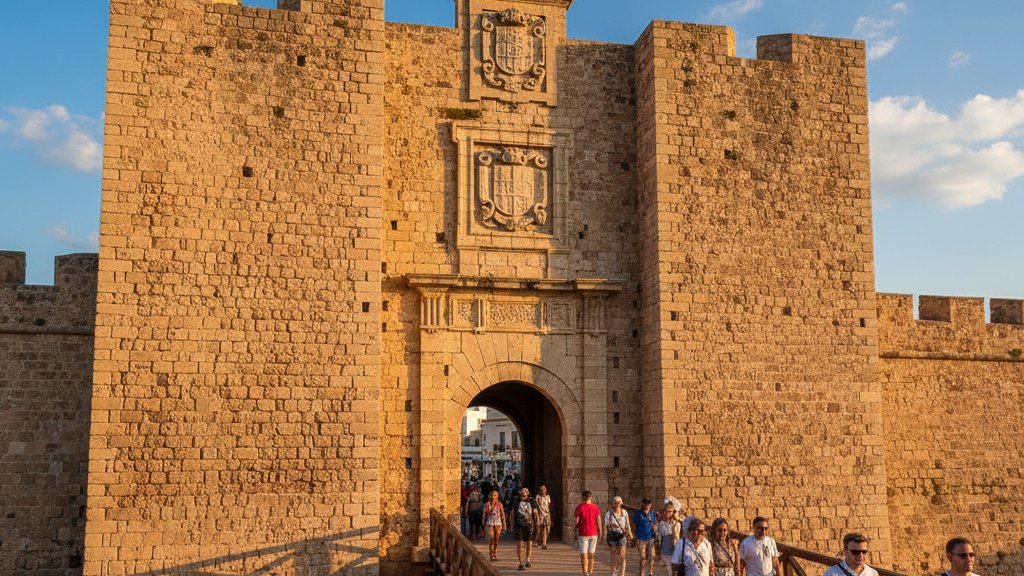
Your journey begins at the Portal de ses Taules, the grand main entrance to Dalt Vila. This is the most dramatic gateway on the island, a Renaissance-era portal flanked by two Roman statues (replicas of originals found during excavations) and topped by the coat of arms of Philip II. You cross an original drawbridge over what was once a defensive moat.
Stand in the gateway for a moment and look up. The enormous stone walls rising on either side were designed by the Italian military engineer Giovanni Battista Calvi in the 1550s, commissioned by Charles V to defend against Ottoman raids. These are not medieval walls but Renaissance military architecture at its finest, built with angled bastions designed to deflect cannon fire.
Tip: Arrive before 10:00 in the morning or after 17:00 to avoid cruise ship groups that tend to cluster at this entrance between late morning and mid-afternoon.
Stop 2: Plaça de Vila and the First Ramp
Once through the gate, you emerge into the Plaça de Vila, a lively square with restaurants and small galleries. This is the commercial heart of the lower citadel, and while the restaurant prices here reflect the tourist location, it is a pleasant place to sit with a coffee and absorb the atmosphere.
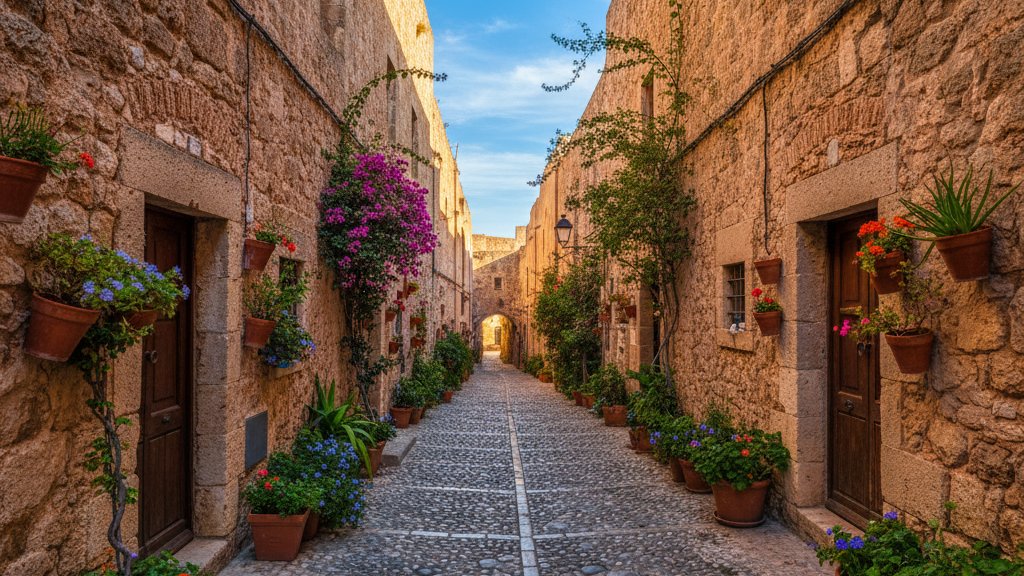
From the square, follow the wide cobblestone ramp upward. This ramp was designed for horses and carts, not just pedestrians, so the gradient is manageable even in summer heat. The walls on either side are thick with bougainvillea in season, and you will pass small artisan shops selling ceramics, jewelry, and leather goods made on the island.
Stop 3: The Chapel of Sant Ciriac
Look for a small chapel set into the rock on your left as you ascend. The Capella de Sant Ciriac marks the spot where, according to local legend, Catalan troops breached the Moorish defenses during the Christian conquest of 1235. A small opening in the wall supposedly marks where soldiers entered. It is a tiny, easily missed detail, but it connects you to one of the pivotal moments in the island’s history.
Stop 4: The Archaeological Museum (Museu Arqueologic)
Continuing upward, you reach the Museu Arqueologic d’Eivissa i Formentera, housed in a beautiful building that was once part of the old university. The collection spans from Phoenician and Punic artifacts to Roman and Islamic periods. Highlights include terracotta figures from the necropolis of Puig des Molins (another UNESCO site nearby) and Punic jewelry that reveals how cosmopolitan ancient Ibiza truly was.
The museum is small enough to visit in 45 minutes to an hour. Entry costs around 3 euros and is free on Sundays.
Stop 5: The Cathedral of Santa Maria (Catedral de Santa Maria de les Neus)
At the very summit of Dalt Vila stands the Cathedral, originally built in the 13th century after the Christian conquest and rebuilt in the 18th century in a mix of Gothic and Baroque styles. The interior is surprisingly simple and elegant. The Diocesan Museum inside houses religious art and artifacts, and the views from the cathedral terrace are among the best on the island.
On a clear day, you can see Formentera, the salt flats of Ses Salines, and the scattered islets between the two islands. This is the highest point of the fortified city, and you have earned every meter of that view.
Stop 6: The Ramparts Walk
This is the part most visitors miss, and it is the part we love most. Instead of heading straight back down, turn left from the cathedral and follow the path along the ramparts. The defensive walls form a complete circuit around Dalt Vila, and walking along the top gives you a 360-degree panorama of the island.
If you’re planning your trip, you might also want to read 12 Things to Do in Ibiza Town Beyond the Clubs.
The western ramparts face the harbor and are spectacular at sunset. The northern bastions look out toward the mountains of the interior. The eastern walls overlook Sa Penya and the modern town below. Allow 30 to 40 minutes for the full circuit, more if you linger at the cannon emplacements and bastions along the way.
Sunset tip: The western ramparts near the Baluard de Sant Bernat offer what we consider the best sunset viewpoint in all of Ibiza Town. Arrive 30 minutes before sunset to claim a spot on the wall. Bring a drink from one of the small bars inside Dalt Vila.
Practical Tips for Your Visit
Best Time to Visit
- Early morning (08:00-10:00): The citadel is nearly empty. Perfect for photography and quiet contemplation. The light is soft and golden on the stone walls.
- Late afternoon (17:00-20:00): The heat has eased, the cruise crowds have gone, and you can time your walk to finish with sunset on the ramparts.
- Avoid midday in summer: The cobblestones radiate heat, there is limited shade on the ramps, and the temperature inside the walls can feel five degrees warmer than the harbor.
What to Wear
- Comfortable shoes with grip. The cobblestones are smooth and can be slippery, especially after rain.
- A light layer for the ramparts, where the breeze can be surprisingly cool even in summer.
- Sun protection: hat, sunscreen, sunglasses. There are stretches with no shade.
Free Entry Areas
Walking the streets, ramps, ramparts, and squares of Dalt Vila is completely free. You only pay if you enter the museums (Archaeological Museum, Contemporary Art Museum, Diocesan Museum) or specific exhibitions. The cathedral itself is free to enter during opening hours.
Accessibility
Dalt Vila is built on a steep hill with uneven cobblestone surfaces. The main ramp from Portal de ses Taules to the top is the most accessible route, but it is still a significant climb. Visitors with mobility challenges should be aware that there is no vehicle access to the summit (except for residents).
Beyond the Main Route: Hidden Corners
The Contemporary Art Museum (MACE)
Housed in a former weapons store and guard house, the Museu d’Art Contemporani d’Eivissa is easy to overlook but well worth a visit. The collection focuses on Ibiza’s long connection with artists, from the 1960s counterculture era to contemporary works. The building itself, with its vaulted stone ceilings, is as compelling as the art.
For more on this topic, check out Best Restaurants Near Vara de Rey: A Local Foodie Guide.
The Quiet Streets of the Upper Citadel
Above the restaurant zone and below the cathedral lies a residential area where people still live within the ancient walls. Laundry hangs from windows, cats sleep on doorsteps, and bougainvillea cascades over iron balconies. Wander these streets without a map and you will discover doorways, courtyards, and views that no guidebook mentions.
The Northern Bastions
The bastions on the north side of the walls see far fewer visitors than the harbor-facing ones. From here you look out over the rooftops of the new town toward the hills of Santa Eulalia. It is a peaceful spot, often completely deserted, and an excellent place to sit and read or simply breathe.
Dalt Vila at Night
The citadel transforms after dark. The walls are illuminated, the restaurants in Plaça de Vila glow with candlelight, and the streets become atmospheric in a way that feels almost cinematic. An evening stroll through Dalt Vila, perhaps after dinner in the lower town, is one of the most romantic things you can do in Ibiza.
In summer, the citadel hosts occasional concerts, film screenings, and cultural events within its walls. Check with the local tourist office or ask at your accommodation for current listings.
Explore Our Rooms
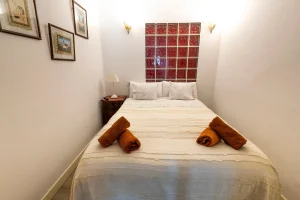
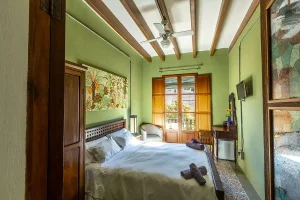
Start Your Dalt Vila Walk from hIbiza
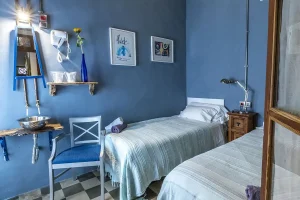
Our boutique hostel sits in the heart of Ibiza Town, just minutes on foot from the Portal de ses Taules. Roll out of bed, grab a coffee on Vara de Rey, and you are at the gates of 2,500 years of history before most visitors have left their hotel pool. That proximity to the old town is one of the reasons our guests keep telling us they chose the right spot.
Whether you are here for a weekend or a full week, Dalt Vila deserves more than one visit. Go at dawn. Go at sunset. Go on a Tuesday evening in October when you have the ramparts entirely to yourself. It never gets old.